I was out looking at some windblown trees, I didn't go out to see them, I went out to photograph adders! I often see Adders in Sisland wood, so that was my original quest, and that's the great thing about mooching about in the countryside, you may go out to with the intention of seeing a specific thing, bluebells, Jays, slow worms or muntjac...and chances are you won't see them.
But it doesn't really matter, unless your being paid to film something, after 10K of expenses and 6 weeks up a freezing mountain, then obviously not seeing a Snow Leopard would be really annoying, but for me not seeing what I want, isn't that important, because I'll see something else instead.
If you're just out for fun, looking for a thing, a specific thing, you may get lucky if you've seen it before in the same place, your chances are greatly increased if it's a stationary thing, like a plant or fungi, or something in a specific habitat like a newt in a pond, but on the down side you have to be there at the right time, or season. Making big promises to small children about the millions of bluebells they will see and then taking them to a wood 2 weeks before they flower or two weeks after, leads to a miserable drive home, and small children will punish you for this, until bribed with treats.
If your hunting a locomotive thingy then sods law predicts as soon as you announce confidently to your friend "Hey I know a place where there of lots of toads" the toads somehow know you're coming, and hide, just to embarrass you.
So going with low expectation even though you would really like to see a specific thing, is always a good plan. Finding no newts in the pond, but seeing hares boxing in a field on the way there is still pretty cool.
This day in Sisland wood was one of those days, Adders Vipera berus were laughing at me, they were in the wood, I just didn't see them, I suspect because the adders knew I had gone to the effort of buying a new camera, adders are notorious for taking the piss. Once I left the wood they gathered in a group leaning up against trees, smoking fags and saying things like "He walked right passed me, what a jerk, shoulda seen the look on his face, him and his new posh camera... Idiot."
So I just enjoyed the other things I saw, like on the way there I saw a Sparrow Hawk Accipiter nisus mobbing three buzzards Buteo buteo, and the agile hawk won the battle! I have never seen this before, I've seen three or four rooks mobbing a buzzard and also seen rooks mobbing marsh harriers Circus aeruginosus circling a rookery.
The hawk attacked the buzzards from above and behind every time, at speed, wings folded in a stoop and clipped the fanned tail feathers of the buzzards, eventually the buzzards decided enough was enough and glided up and away into the distance.
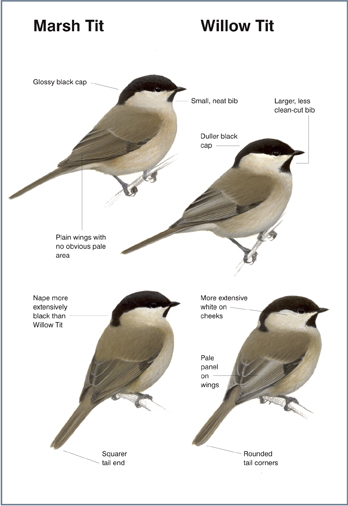 The first thing I saw on the edge of the wood even before I had entered it, was either a marsh tit or a willow tit, I can't tell the difference, birds are not my strong suit.
Sisland is my favourite wood in Norfolk, small about 60 acres, but varied, stands of scots pine, beech, sweet chestnut, robinia and alder, and a smattering of birch, oak and a few other mixed natives.
On arriving at Sisland, the damage from Winter storms was obvious, plenty of windblown trees. Root plates folded in half. Actually more than half...when a tree is blown over often about 60% of the root plate ends up bent upward in a vertical position, the other 40% remains in situ, still in the ground trapped beneath the stem of the now horizontal tree stem.
Seeing all these rootplates like giant half dinner plates sticking out of the ground was impressive, most 1 -2 m high, some were sticking up at 4m high.


Mattheck, C., and Breloer, H. (1993) The body language of trees a handbook for failure analysis. London. HMSO.
Shigo, A. L. (1986) A new tree biology. New Hampshire. Shigo and trees, associates.
Seeing all these rootplates like giant half dinner plates sticking out of the ground was impressive, most 1 -2 m high, some were sticking up at 4m high.

At ground level the rootplate on the right of the piece sticking up is intact on the stem side, just bent at right angles and remains in place underground. The rootplate sticking up was about 2.5 m high, 1 m below the stem and 1.5 m above the stem.
To illustrate what I'm talking about I made a highly sophisticated model from paper and a straw.


Tree upright windblown tree, notice how 40% of the rootplate is still where it should be, the reason why some windblown trees continue to grow on after catastrophe..
This rootplate was even bigger, 4 m in the air, from a poplar about 800 mm at DBH.

What I find amazing is every windblown tree I saw that day, with its rootplate up in the air not one had a 'tap root'. Because mature deciduous trees don't have tap roots.
This is a bit of a frustrating matter for me, I was taught at school, 'all trees have a tap root' and still this myth persists, a factoid walks like a fact, talks like a fact, re-printed like a fact, but is in fact, codswallop (Rackham 2001) .
You probably know some factoids yourself, like you should feed hedgehogs in your garden with bread and milk...untrue, and it actually gives them diarrhoea.
Or the Great Wall Of China can be seen from space...No it cannot, if you could see a wall only 5 m across you should be able to see every motorway in the world from space, which is obviously codswallop.
Now the odd thing about this is - even though you can clearly see - neither of these trees have a tap root sticking out of the middle of the rootplate, folk will still argue with me on this. Dr Claus Mattheck & Mrs Helge Breloer, Dr Oliver Rackham and Dr Alex Shigo have all written about the tap root myth, but sadly the factoid just keeps getting repeated and reprinted. I actually have 19 photos from 19 windblown deciduous trees that day and only one had a central tap root, because that tree was only about 6 years old and was brought down by a larger tree that fell on it, saplings do have tap roots.
Saplings have tap roots to stabilize them when the are young, as the tree matures these tap roots shrivel and die off or just cease to grow anymore, because their job is done. The mature tree is held up much better by a wide circular rootplate, some 60 cm deep. Why not deeper you may be thinking? Well because most of the water comes from above as rainfall and only penetrates about 60 cm into the ground. Little point in the tree wasting energy in sending down water seeking roots to bone dry ground.
Apparently the myth started a few hundred years ago when caves in Derbyshire and Cheddar were opened to the public, as people entered the caves they saw great long roots coming down into caves and terminating in pools beneath stalactites, some over 50 feet long.
No one had ever walked beneath a forest in a cave before, and it was assumed all trees did this, despite the fact the woodsmen and foresters who were very familiar with windblown trees for over 1000 years were saying 'Er, no, that's rubbish'.
The only reason these long roots were found in caves was because there was water, caves are often damp, often have pools for the roots to touch. Totally dry caves don't have roots from trees in them. Sadly no one cared about this and botanists started making imaginary diagrams which purported to be the roots plans of trees, often these were sort of mirror images of the trees above ground, and all invented.
Below is one such fantasy diagram I found on the internet today

A factoid, and a fact.
This factoid above was somewhat backed up by if someone pulled up a birch sapling it did indeed have a tap root, "There you go, my hypothesis is proved, hoorah", no one checked mature trees for a tap root because you can't pull a mature birch tree up!
But what amazes me still, is although woodsmen, foresters and arborists were all saying for a hundred years or so "mature deciduous trees don't have tap roots, we can prove it, check out some wind blown mature trees?" they were pretty much ignored. And even though most botanists now know the foresters were correct, many books still reprint the tap root factoid.
This blog is aimed at adults, so I assume 'codswallop' is a word I can use?
Rackham, O. (2001) Trees & Woodland in the British Landscape. New York. Pheonix Press.
Mattheck, C., and Breloer, H. (1993) The body language of trees a handbook for failure analysis. London. HMSO.
Shigo, A. L. (1986) A new tree biology. New Hampshire. Shigo and trees, associates.

No comments:
Post a Comment